
Metal-free inlays in Tijuana for larger fillings.
An inlay is a filling made outside the mouth, in porcelain or composite, and bonded into the tooth. We use metal-free inlays when a cavity or an old amalgam filling is too large for a regular filling but the tooth doesn't need a full crown.
- Porcelain or composite, no metal
- Made to fit in the clinic's lab
- Keeps more natural tooth than a crown
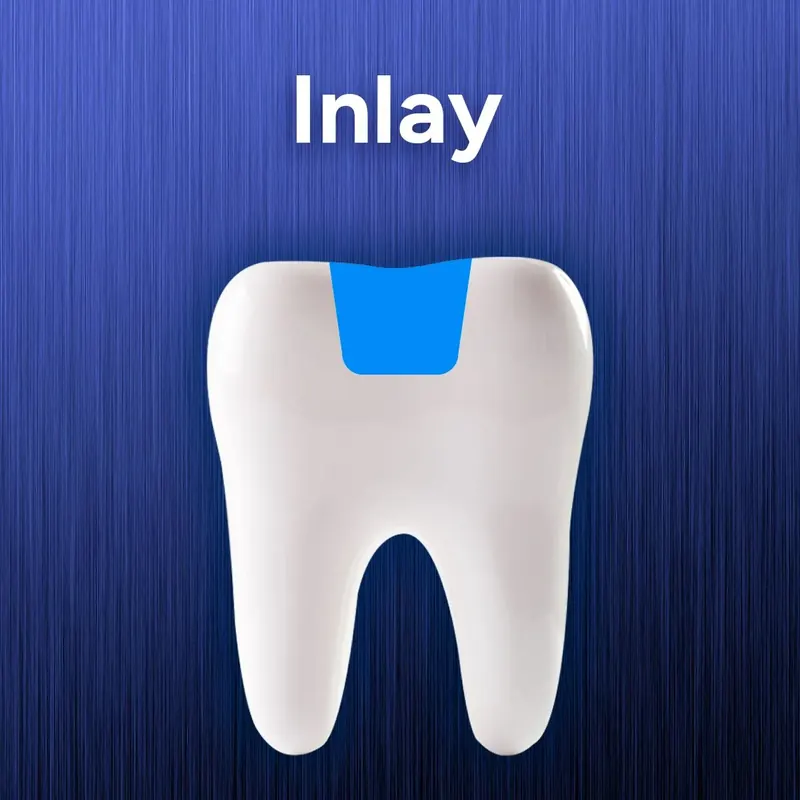
When an inlay makes sense
Porcelain inlays and onlays are alternatives to large fillings and crowns. They are often used to restore cavities or replace amalgam fillings that take up more than about a quarter of the tooth, or that have damaged one of the tooth's walls.
An inlay sits inside the cusps (the raised points) of the tooth. If a cusp is damaged too, an onlay covers it. Either way, less tooth is removed than for a crown.
- Larger cavities
- Replacing old amalgam fillings
- Teeth with a damaged wall but healthy cusps
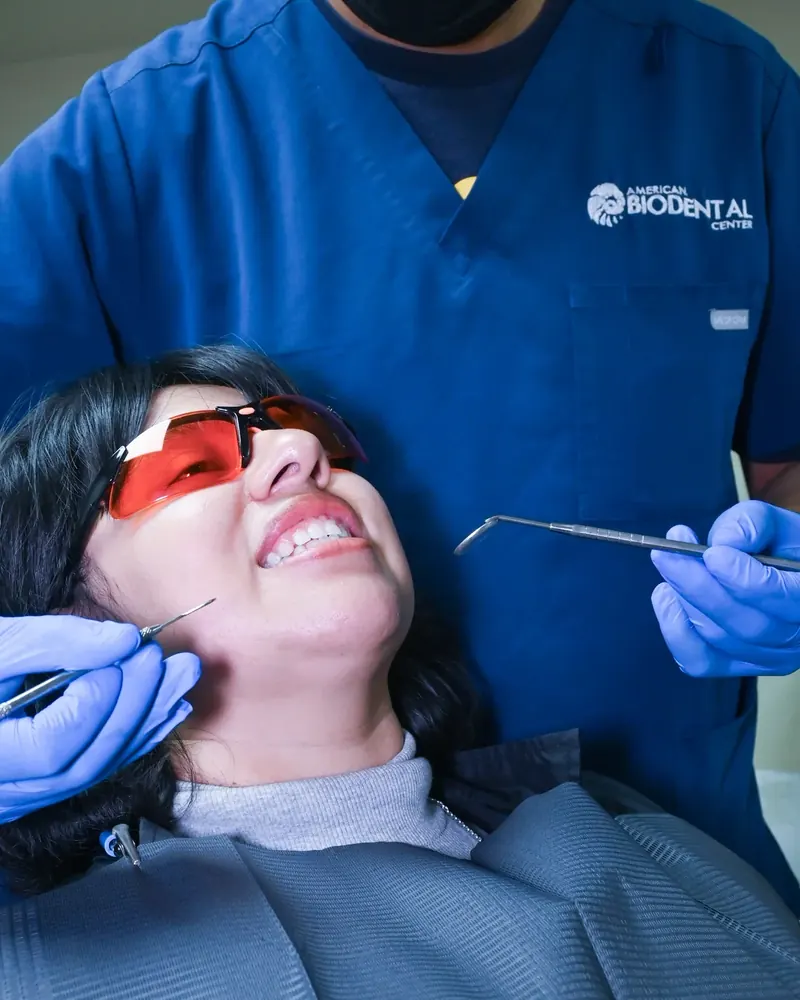
How an inlay is made
Prepare the tooth
Decay or the old filling is removed. Amalgam is removed following the Huggins protocol.
Design
An impression or 3D scan is taken, and the inlay is designed with CAD/CAM technology.
Make
The inlay is milled or made in the clinic's dental lab from porcelain or composite.
Bond
The inlay is bonded into the tooth, checked against your bite and polished.
Inlay questions, answered.
Still unsure? Our team can walk you through it by phone.
Request InformationPorcelain (ceramic) or composite. Both are tooth-colored and contain no metal.
An inlay sits inside the cusps of the tooth. An onlay also covers one or more cusps. Your dentist chooses based on how much of the tooth is damaged.
Not always. For small cavities a filling is usually enough. Inlays are for larger cavities or old fillings, where a lab-made restoration can fit the tooth more closely. Inlays and onlays are also better suited for areas where your teeth make greater contact with each other, as they can withstand much more of the jaw's bite force than fillings. Which option is better or necessary for you is discussed by the team during your evaluation.
Yes. The old filling is removed following the Huggins protocol for Mercury Safe Removal, then the inlay is made and bonded.
The clinic accepts cash, credit and debit cards (Visa, Mastercard, AMEX), Zelle and PayPal. Unfortunately, CareCredit is not currently accepted. The clinic can provide a superbill for you to submit to your PPO insurance after the services have been rendered.
Ready to plan your visit?
Talk with a patient coordinator about your treatment, your X-rays and your trip to Tijuana.

Biological dentistsDr. Aguirre, Dr. Mendoza Moreno and team